
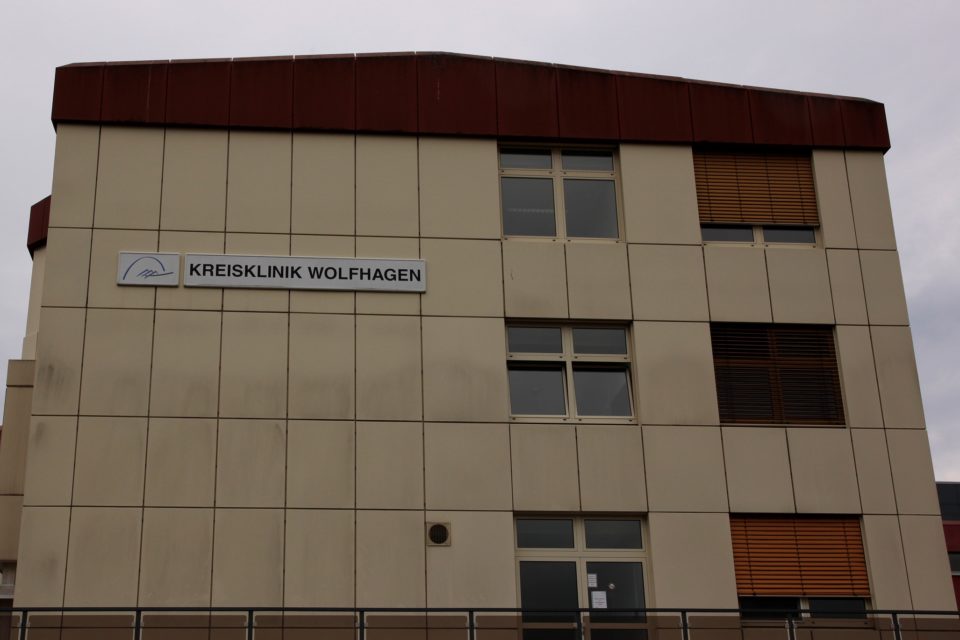
The fight against the closure of the Wolfhagen district clinic in the Kassel district unites an entire region against an absurd health system and the solo efforts of the Mayor of Kassel. Report on a provisional clinic closure at the time of the coronavirus and a killing spree.
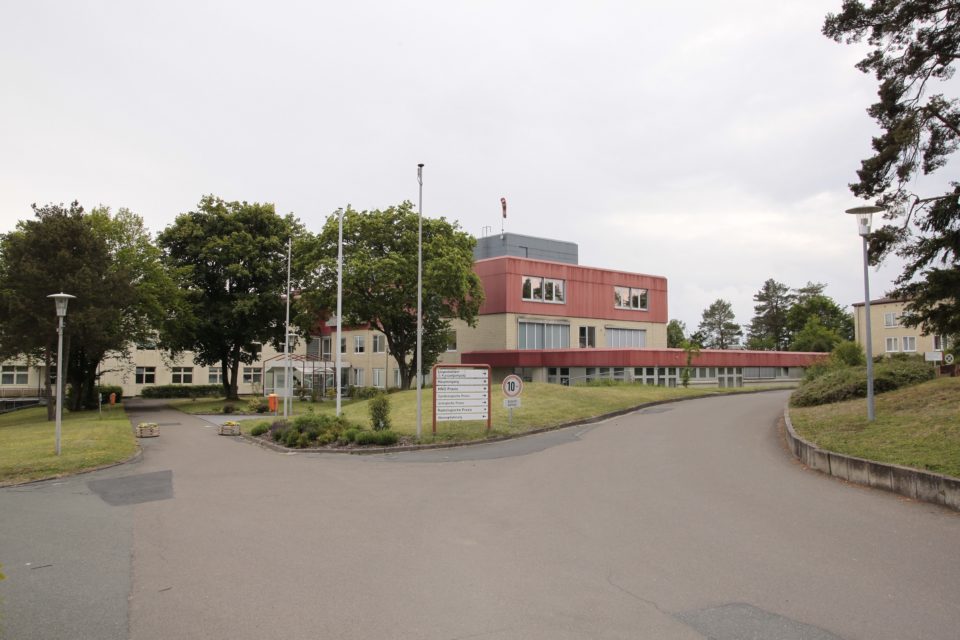
As 2005 The Wolfhagen and Hofgeismar district clinics in the Kassel district are part of the municipal clinic group Gesundheit Nordhessen Holding (GNH) became, Hardly anyone could have imagined the contrite end of this economic cooperation 15 Imagine years later. The contract idea: The large urban hospital group GNH helps the small hospital with a lot of know-how, to ensure better health services. The city of Kassel has the main ownership rights, The Kassel district joins the group as a junior partner.
The first attempt
In the autumn 2019 The GNH then announced the abrupt closure of the Wolfhagen district clinic. It's not worth it, to continue running this clinic, is the common argument. There would be no black ones, but only in the red. A large part of the workforce found out about the closure from the regional newspaper and the hastily called works meeting afterwards, which was only held by Kassel's mayor Christian Geselle. But there are no operational layoffs, said the group and was already there, to accommodate the employees in the Kassel municipal clinic and other locations. The staff is needed elsewhere, Wolfhagen is not worth it, There is no need for an outdated rural clinic in Scarce 30 Minutes drive from the Kassel Clinic and the clinic group is presenting a reorientation, that's what the hospital group trumpeted in the local press. A consulting company had the so-called realignments and savings in the first half of the year 2019 suggested.
The decision, to close the clinic, Strictly speaking, however, it was not solely in the hands of the chairman of the GNH supervisory board, namely Christian Geselle (SPD). Also the junior partner, the district of Kassel, represented by District Administrator Uwe Schmidt (also SPD), should actually have agreed. The joint committee, the general meeting of GNH AG with eligibility rights 92,5% city and 7,5% Land, but was deliberately ignored, by not even questioning it, whereby there should have been a unanimous vote.
A court case brought against this solo effort changed the proportionality again, but drew the line rigorously. The district fought under the direction of the citizens' association “Förderverein Kreisklinik Wolfhagen” (FKK-WOH) around his clinic, To the displeasure of the employer GNH in personal union with the mayor of Kassel. There was rumblings behind closed doors after the court found that the closure was illegal. However, going it alone by the GNH should remain a defining factor in the coming months.

Resistance in Wolfhagen
People in Wolfhagen were outraged by the closure plan. For many older people, the local hospital is the nearby healthcare facility for all sorts of everyday ailments. Emergencies can also be treated much more quickly in the emergency room. After all, the closest hospital in Kassel is only after 35 reachable within a minute's drive. Minor procedures can be carried out close to where patients live, which makes visits easier. Basically, that's also a question, why basic care with bed capacity and an emergency room can be “too much”..
However, the proverbial attempted stomping had a prelude in December 2013. At this point, obstetric services in the Wolfhagen district clinic were closed. Apparently because of too few skills and the argument popular with economists, that it's just not economically worthwhile. Since then, more children have been traveling to... 30 He was born in Kassel, minutes away, Birthplace country road. “The maternity ward gave birth to half of Wolfhagen. The closure due to lack of quality due to failure to achieve 400 Births a year are something you have to let melt in your mouth.”, is what the Wolfhagen District Clinic Support Association says, “Those were purely profit reasons.”
“The maternity ward gave birth to half of Wolfhagen. The closure due to lack of quality due to failure to achieve 400 Births in a year are something you have to let melt in your mouth. Those were purely profit reasons.”
The association was founded against the end of obstetric care and organized protests, which found a great response in Wolfhagen. However, that was in vain, the station was closed. With this dissatisfaction in mind, the support association organized itself in the fall 2019 the faster against the final closure of the clinic.
The dispute over the clinic was to take on absurd aspects over the coming months. The dissatisfaction of the majority of Wolfhagers, held tight with later 15.000 Signatures against the closure, initially generously ignored by those responsible in the city's committees. The same thing happened with the protests on the streets of Wolfhagen with up to 500 participating. Meanwhile, the protest camp rallied sustainably: Doctors Network, parties in the district, Wolfhagen country seniors, Zierenberg city councilors and many more joined the demand.
Wolfhager's accusation against the GNH: Essentially using the district clinic as a lost property. I mean: The group's loss-making items, including care and downtime, were outsourced here, Doctors' positions are not filled, Infrastructure not improved. And now they wanted to solve their own misery by taking over the specialist staff, which is lacking in Kassel, finish.
Closure by fire protection
After the court decision went against the GNH, Any advancement of the closure idea was banned by the court. The company was no longer allowed to think about it publicly, how best to close Wolfhagen. However, the idea obviously continued, was not only evident in the most impressive speeches of the GNH delegates at discussion events such as the HNA readers' meeting in November 2019. Another GNH house in the Kassel district, the hospital in Hofgeismar, was suddenly included in the discussion. In the old divide-and-rule tradition, arguments were made from the corporate side, that Hofgeismar had to close,if Wolfhagen remained open.
In October 2019 then the GNH's offer to the district in the style of a pistol on the chest: Purchase of the hospital, It would be necessary to renovate fire protection and cover the costs of ensuring emergency care, or closure of the Wolfhagen district clinic. Here it becomes clear: The city of Kassel and the GNH want to avoid financing the internally underfunded district clinic at all costs, If possible, with the takeover of the staff contractually bound to the GNH.
While the fronts clashed at an HNA readers' meeting on the topic in November, When the FKK-WOH invited a discussion, no GNH board member showed up. But in every event, the conflicting parties essentially discuss local emergency supplies with basic medicine and crisis preparedness for flu pandemics against purely economic considerations. You read that right: There was public criticism four months before the outbreak of the corona pandemic, that it would be a wrong decision, to close a hospital with a ward and ventilation places. A compromise proposal would be a medical center without any inpatient care. A proposal that the support association and its colleagues are against, no matter how often it has been raised in the last few months. They are concerned with inpatient local care with basic medicine.
Nevertheless, focus on city, Landes- and federal level the issue was addressed, Last but not least, the left-wing factions played a defining role here, was in January 2020 the basic financing of emergency operations 400.000 Euro finally rejected at state level. Which tightened the financial noose. Meanwhile, the GNH made further sales offers to the district in the local press with sums of 3,2 Millions of euros.
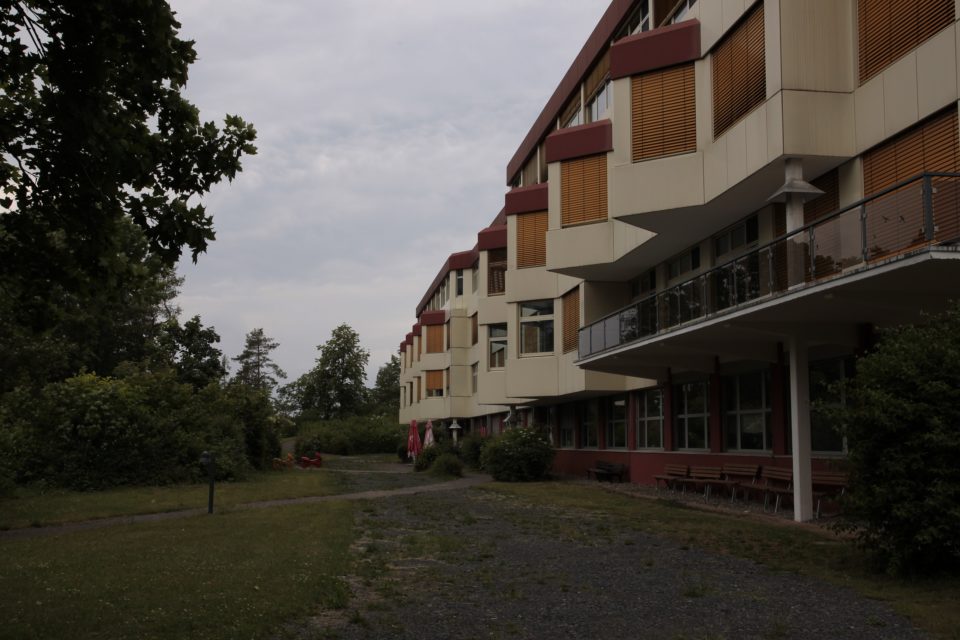
Am 21. February 2020 then the inglorious signal in the closure debate. Christian Geselle concludes with a windy fire protection report from Munich in his luggage, that the clinic must close with immediate effect. “This was a political rampage by Christian Geselle who only wanted to grant people in the district outpatient treatment.”, one states bitterly in the support association. “We are experiencing a style of politics here with methods like Donald Trump.”
“This was a political killing spree by Christian Geselle, We are experiencing a style of politics here with methods like Donald Trump.”
And you're not alone in that. In a court case before the Higher Regional Court in Frankfurt, Geselle and the GNH board were found to have a “dubious legal opinion”.. How other cities close down unpleasant bars or clubhouses using the manslaughter argument of fire protection, An entire hospital in Kassel is closed.
That fire protection had to be expanded, is beyond question for those responsible. What urgency this has, is, however, very questionable. In January, before this “closure with a crowbar”, a new fire alarm system was installed and further expansions were planned – of course in cooperation with the Wolfhager fire protection department. Even the district came to the same conclusion, that all proportionality has been thrown to the wind here.
Pandemic and rampage
It only took two days after she logged off the emergency network, until the hospital's emergency room was urgently needed. In neighboring Volkmarsen, a gunman drove his car into a celebrating crowd. The 154 Some of the seriously wounded were driven from Kassel to Paderborn and Bielefeld, while the 11 Minutes away, the Wolfhagen emergency room remained empty. The hospital reported that it was ready for action within a very short time after a broadcast.
The emergency room staff who stayed at home after the closure “stood at gunpoint”, after they found out about the accident, we know in the support association. People are still outraged months later: “This final deregistration at the control center is obviously a political issue, Geselle wanted to finally show that Wolfhagen is not needed in emergency care in Kassel and the surrounding area.” In the end, this was shown to be at the expense of the patients.
“This final deregistration at the control center is obviously a political issue, Geselle wanted to finally show that Wolfhagen is not needed in emergency care in Kassel and the surrounding area.”
The same approach was also evident in the handling of the beginnings of the corona pandemic in March of this year. Although in Wolfhagen 84 Hospital beds with sufficient oxygen treatment for less severe cases are available, The clinic was not taken into account for the district's bed availability in the event of a pandemic. According to this logic, civil protection would initially have acquired a gymnasium rather than a treatment center, to be used as a fully equipped clinic.
The Kassel district ultimately followed up on GNH's sales offers and began looking for a new clinic operator in February. According to press reports, the Catholic clinic group Agaplesion is to take over the operation, of course according to church employment contract guidelines, not according to union-negotiated collective agreements. The Wolfhagen Clinic will be open from 01. July 2020 open their gates again, now under new circumstances. Health Nordhessen Holding admitted defeat. At least she did it, the clinic, which is supposedly not worth it, get rid of.
DThe hospital money machine
But how “worth it” is a hospital?? Ultimately, the development of hospital closures is not an isolated case in Wolfhagen. After a reform of hospital financing in the year 2003 The financing basis of the German health system tipped from bad to worse. idea of the reform, to register the profit orientation of the hospital industry once and for all. The previously usual same-day care rates, plus pay for more complicated operations, were replaced by the so-called “diagnosis-related case groups”, i.e. DRG flat rates per case. Ostensibly to ensure the comparability of hospitals, but mainly to put the hospitals in competition with each other, which enables cost savings on the patients' backs.
However, a billing system was finally established, established based on flat rates, which links the stay in the hospital to various priced interventions. This system works, that highly complex interventions and their follow-up care cost a lot of money in the till. For trivial things like broken bones, Appendectomy and its bed- and care periods, there is only a small thaler back from the health insurance companies.
The problem for smaller houses and rural areas: Broken bones and appendectomies are commonplace, Complex interventions are not possible. Comprehensive basic care with bed capacity and emergency rooms will just about do that- reduced to an unbearable minimum, because monetary resources are being cut. Profits are only made by concentrating specializations. The result is, that with the “maximum providers” health strongholds are emerging in the big cities, who can produce profits through a wide range of the most complex possible interventions.
In addition to this urban-rural divide, the incessant coding and billing logic in hospitals basically reduces hospital stay times wherever possible and puts the staff under significantly greater pressure to be economically efficient, well-planned staff reductions included.
The death knell for Wolfhagen's financing basis was the withdrawal of the liquidity surcharge to ensure emergency supplies 400.000 Euro from the state of Hesse, because Wolfhagen is supposedly superfluous. Apparently any online route planner was used here, to find out that a trip from city to city in the best conditions is just under 30 takes minutes. The targeted emergency room coverage under state law is 30 Minutes travel time. In reality, of course, the travel times are between hospitals 35-40 minutes.
The Kassel district rightly fears that the closure and restrictions of the district clinics will result in a massive loss of attractiveness for residents and newcomers. In addition, the Wolfhagen emergency room is a regular supplier for the maximum care provider Klinikum Kassel. The profits for complex interventions are recorded there, The aftercare and stay times in Wolfhagen are passed on.
It should be noted that all of these problems also apply to publicly owned clinics. On paper, GNH Aktiengesellschaft is a municipal company. It has been brought into an economically plannable form in the neoliberalization of the health sector since the 1990s, to meet the profit orientation.
Also the centralization to the Kassel Clinic, which was the cause of the closure of Wolfhagen, can only be explained through this development. Small houses have to close, because they are no longer “worth it” after the absurd billing system. However, their usefulness is diametrically opposed. Providing the population with basic medical care is one of the foundations of a good health system. In the German average, this care is being increasingly tailored through the introduction of the DRG system.
Support association and union
The support association for the Wolfhagen District Clinic was primarily responsible for taking the protest against this complex under its wing. About 15.000 Signatures, 3 Well-attended rallies and, last but not least, considerable stamina in the face of powerful opponents are more than impressive on the political stage. This political tailwind and anchoring of a protest movement is astonishing in the rather rural and quiet Wolfhagen, Determined protests against social cuts are usually more common in the country's major cities.
The support association, which is positioned across the political landscape, was founded on the occasion of the obstetrics closure 2013 and was already protesting against the austerity measures back then. With the threats of closure in September 2019 the club received a new burst of activity. The fight to keep the clinic, an area of responsibility traditionally covered by trade unions, was accepted here by an association without the structural involvement of large parts of the workforce. Initially, more civic engagement from Wolfhagen kept the protest going, less so the clinic staff themselves. The association's advisory board consists of higher-ranking clinical staff, However, the rest of the workforce was hardly represented for a long time. And there are reasons for that too, because the commitment in the support association for the preservation of the clinic was intimidated in the best Union Busting manner.
The responsible union ver.di is initially very well positioned in the GNH: With a very high level of organization, the GNH and its flagship Klinikum Kassel are a trade union bastion. However, the centralization on Kassel can also be seen here – The clinic's workforce is overrepresented in the GNH works council, the associated district hospitals have no particular voting weight. This also explains the inaction until consent is given, which the works council and ver.di North Hesse demonstrated in view of the threatened closure of Wolfhagen.
Ver.di Nordhessen consequently took the employer's side when it came to the closure of the clinic and supported the interests of the GNH against the will of the people of Wolfhagen. The rank and file of the workforce were neither consulted nor informed about this point by the works council and the union. A classic co-management for the GNH. was argued, that the valid collective agreements of ver.di still offer more benefits when working in another branch of the GNH than the Wolfhager Klinik maintains among other hospital groups. A statement, which is objectively correct, but ignores every other level of the complex. The developments in hospital policy went completely uncommented.
“Ver.di also failed to close the Wolfhagen hospital. Neither do they have the workforce in Wolfhagen, nor the entire GNH is involved or privy to decisions. This is non-transparent works council policy.”, is rumored behind closed doors among ver.di employees, because even internally the course is controversial: “Rather, we should have declared war together with the workforce on the German austerity dictate in the health sector from a union perspective.”
“Ver.di also failed to close the Wolfhagen hospital. Neither do they have the workforce in Wolfhagen, nor the entire GNH is involved or privy to decisions. This is non-transparent works council policy. Rather, we should have declared war together with the workforce on the German austerity dictate in the health sector from a union perspective.”
However, in this case it is not about the amounts on the salary invoices, but rather the fundamental question of what type of healthcare a region is provided and whether you can find a job in the local area or in the nearest big city, hardly appears in this policy. Whether it was a backroom discussion or complete operational blindness that led to the statement from the works council and the union, can only be speculated. But the workforce is also divided, not everyone wants to sign church contracts with Agaplesion.
There were already delicate attempts a few years ago, to criticize the GNH's investment policy. At that time, Ver.di problematized the emerging financing misery of the Wolfhagen and Hofgeismar district clinics in public statements. However, without further success or consequences. One way, for which a trade union movement can stand up again, Because every closure is also a sign of the need to economize in the healthcare system.
After the Wolfhagen Clinic was rescued under the wing of the district, the support association is now recording many new entries. One can now soon speak of a high degree of organization of the workforce, which consolidates there, Of course, far from the union idea. This wasn't a given before, because there was pressure and threats from the GNH, that hospital employees in Wolfhagen lose their jobs, if they became active for the support association. You can almost talk about union busting without a union. Many of Wolfhagen's workforce only now have the opportunity, to join the club, after it is clear, that you can no longer lose your job. The support association sums up not without pride: “This clinic rescue is an enormous democratic signal. Together with the people in the Wolfhager Land, a clear rejection was given to the trickery of a policy behind closed doors.”
“This clinic rescue is an enormous democratic signal. Together with the Wolfhagers, a clear rejection was given to the philandering of politics behind closed doors.”
A democratic signal
Inclusion in the population, which, last but not least, points to a central point of the association's demands. The support association is to have a seat on the supervisory board of the new Wolfhagen clinic landscape, in order to secure the beginning of democratic participation of the population and ultimately also the workforce. At least that's what you claim. One feels distantly reminded of collective models, when it comes to it, that hospital operations should be democratized after all the bad experiences of the last few months. To what extent and how the democratic claim can ultimately be implemented, remains to be seen. Unfortunately, the eventual takeover by Agaplesion does not give rise to much expectation in terms of co-determination.
However, cooperative health care would not be the pipe dream of social utopians. Bought in Spremberg, Brandenburg, also through a support association, the workforce maintains and maintains their own jobs 51 Percent of clinic shares. The hospital belongs to Spremberg 300 „Chefs“, who share the work. A backroom politics, as presented by Geselle in Wolfhagen would be impossible in such a setting.
From July 2020 the clinic will take a new path, The district and city have further decoupled their health care from each other. Christian Geselle has proven himself as mayor of Kassel, that he has what it takes to be a scheming autocrat, However, he is not even suitable for being a social democrat.
Whether the fight for the clinic in the district will be reflected in a more democratic and fairer approach to the hospital system, the coming months will show. However, there are some financing difficulties on the horizon for the Wolfhagen and Hofgeismar clinics under the aegis of the district and Agaplesion. Here it becomes clear: In the German hospital system, the only choice is between closure and underfunding.